
Apparel: The Next Game Changer in Quick Commerce
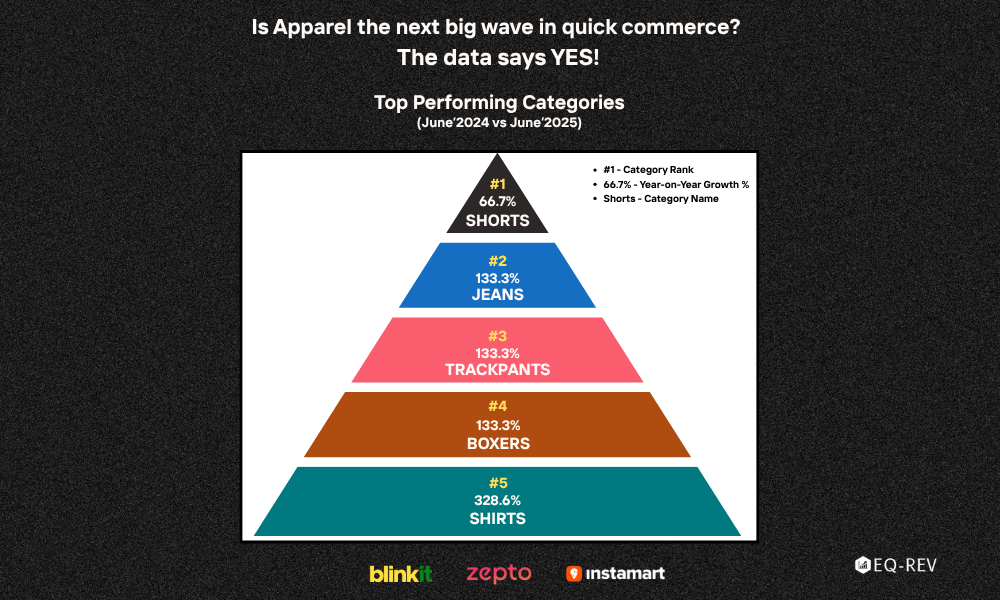
India’s quick commerce sector has moved far beyond groceries—and this year, apparel emerged as the new powerhouse, defining how millions shop for fashion across cities and towns. From June 2024 to June 2025, fashion was not just delivered quickly; it reshaped the entire quick commerce business model and opened vast, untapped growth avenues for platforms, brands, and consumers.
From Groceries to Garments: The Rise of Instant Fashion
Quick commerce, once synonymous with emergency groceries, is now revolutionizing fashion retail. Platforms like Blinkit, Swiggy Instamart, Zepto, and newcomers like Myntra’s M-Now rolled out instant delivery for a wide range of apparel—from basics like T-shirts and socks to ethnicwear and party-ready looks. In 2024–25, the market saw explosive demand for fashion delivered in 10–30 minutes, both for impulse buys and urgent needs.
“Fashion has largely remained untapped in the quick commerce space, and we believe there is a major opportunity here, especially during high-demand festive seasons like Diwali and Rakhi.”
— Sidhant Keshwani, CEO, Libas
Quick Commerce Apparel Market: By the Numbers
India’s quick commerce fashion market was valued at $700 million in 2024 and is set to reach $5.5 billion in 2025, with triple-digit YoY growth.
Platforms like Blinkit, Zepto, and Swiggy Instamart are posting fashion sales spikes of 280% across Tier-1, Tier-2, and Tier-3 cities.
Apparel is forecast to reach up to $9.95 billion in Q-commerce sales by 2029, tripling its share in five years.
Metric | Value (2024–25) |
|---|---|
Q-commerce apparel market size | $700M |
Projected market size by 2025 | $5.5B |
Platform sales increase | 280% |
Users buying apparel in Q-commerce | >26M |
Why Apparel Suits Quick Commerce
1. Urgency Meets Impulse
Consumers bought basics (innerwear, socks, T-shirts) due to simple sizing and necessity, driving high purchase frequency and low returns.
Ethnicwear, party-wear, and travel outfits spiked around festivals, weekends, and events, with users ordering garments same-day for office, parties, or social gatherings.
2. Urban & Tier-2 Demand
Fashion in quick commerce surged in metro cities and rapidly penetrated Tier-2/3, fueled by social media discovery and younger, tech-savvy shoppers.
Platforms optimized their dark stores—stocking best-sellers and universal basics that sell fast and fit most.
3. Tech & Operations
AI-driven inventory placement, real-time data updates, and automated supply chain allowed platforms to fulfill thousands of fashion orders per minute.
Logistics improvements made 10–30 minute garment delivery possible, ensuring speed and customer satisfaction.
4. Social Media Influence
Social platforms triggered instant buying. Shoppers spotted a look and ordered via Q-commerce apps for near-immediate delivery, amplifying trend-led impulse purchases.
Winning Categories in Q-commerce Apparel
Basics: T-shirts, socks, innerwear (Jockey, Adidas, Pepe)
Casualwear: Joggers, shorts, school uniforms
Ethnicwear: Kurtas, chudidars, festive outfits (Manyavar)
Footwear: Workout shoes, casual sneakers, chappals
Partywear & Co-ords: Last-minute, occasion-based looks
Platforms initially focused on universal basics, which align with the Q-commerce business—minimal sizing issues, perpetual usage, high repeat rates, and lower return rates. But the trend is shifting fast towards event-led and occasionwear, with festive and party categories growing sharply around national holidays and weekends.
What’s Next: Apparel Driving Quick Commerce Growth
From June 2024 to June 2025, apparel transformed quick commerce from a convenience service into a lifestyle destination. As platforms expand selection and optimize delivery, expect:
Tier-2/3 cities to adopt quick fashion with growing enthusiasm, driving new user acquisition.
Personalized recommendations & influencer collabs to influence impulse fashion purchases.
Festival & event-led spikes to shape platform inventory and campaign strategies.
Profitability improvements: Apparel’s higher margin, lower return rate basics, and prepaid models will help quick commerce platforms accelerate their path to sustained profits.
Key Takeaways for Brands, Retailers, and Marketers
Focus on basics for volume, occasionwear for margin and spikes.
Partner smartly with Q-commerce platforms—stock well, localize selections, and leverage flash campaigns.
Optimize operations for speed, accuracy, and customer delight.
Invest in digital-first, influencer-powered marketing to drive instant conversions.
Prepare for rapid expansion beyond metros—India’s young, urban, and increasingly digital population drives growth in apparel delivered at speed.
Apparel isn’t just the next big thing in quick commerce—it’s the sector transforming how Indians shop for style, every hour of every day.
For platforms, brands, and marketers, the instant fashion revolution is here to stay—and by all signs, it’s only getting faster.